

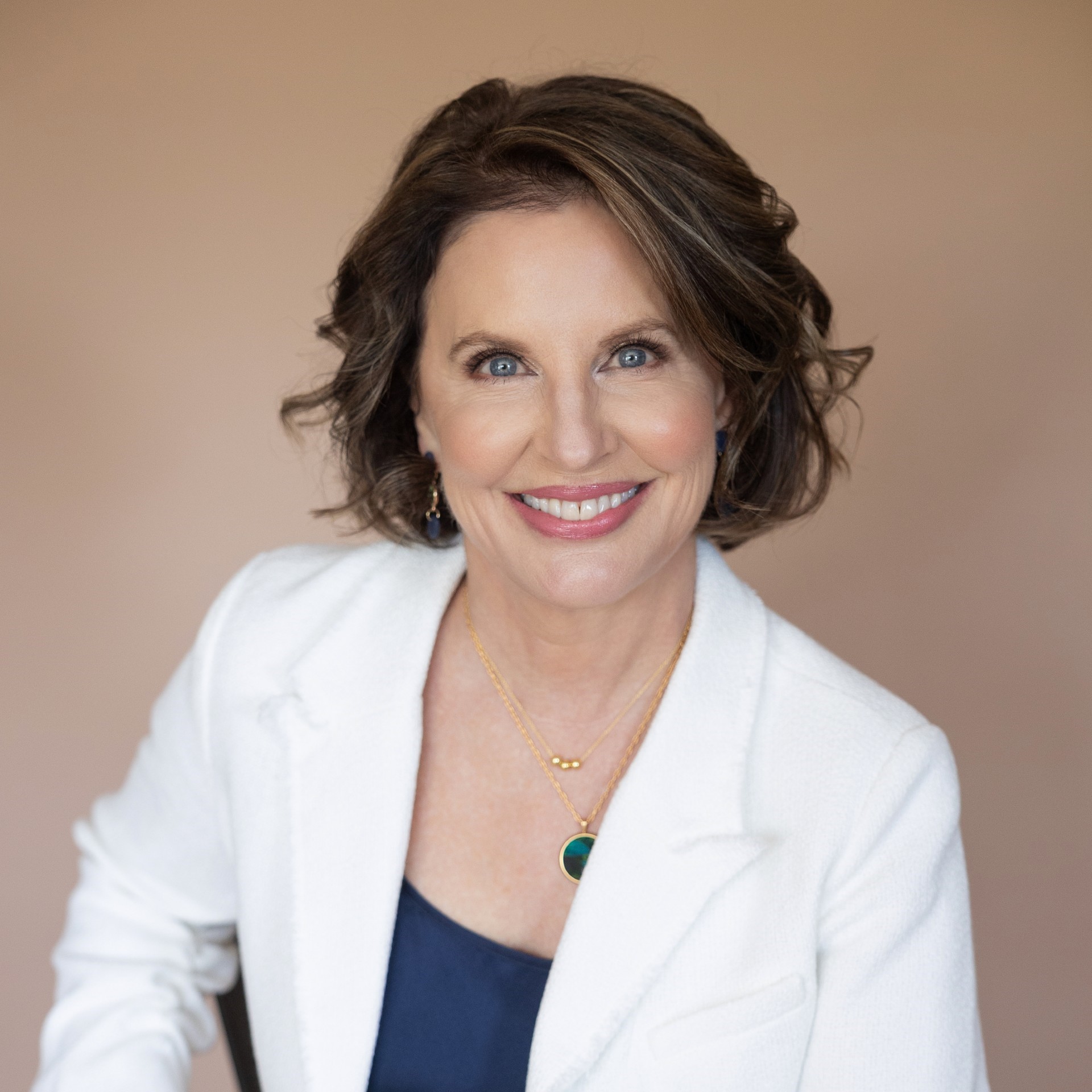
For as long as she can remember, Dr. Elizabeth Killebrew has been a people pleaser.
As the oldest of four children—and the first grandchild in her family—she grew up believing that her purpose in the world was tied to the joy she could bring others. In practice, that meant throwing herself wholeheartedly into nearly every activity available to her. She worked hard to maintain near-flawless grades, signed up for countless extracurriculars, and did whatever she could to earn the praise of the people whose opinions mattered most.
That drive served her well most of the time. But it also meant that failure, when it came, felt enormous.
She still remembers the day she sat behind the wheel of her father’s long, sleek Mercury sedan from the 1970s, attempting to parallel park during her driving test at age sixteen. When she failed to pull it off—and failed the test—it felt devastating.
“I hadn’t really failed very much,” Beth recalls. “My whole life had been about pleasing other people and getting affirmation. When I failed that driving test, I was incredibly embarrassed and disappointed.”
It was a small moment in the grand scheme of things, but it left a mark.
“I had to come to grips with the fact that you’re not going to be perfect at everything,” she says. “The world is still going to spin and you’ll be okay. But at the time it was horrible.”
Over time, that all-consuming need to please others softened. But the deeper drive behind it—the desire to excel and to contribute meaningfully—never faded.
Today, that determination has culminated in her role as President and CEO of Southern Crescent Women’s Healthcare, a faith-based obstetrics and gynecology practice that has served women south of Atlanta since 1986.
Looking back, Beth believes that learning to navigate disappointment was just as important as learning to succeed.
“How we handle success is the flip side of how we handle disappointment,” she says. “And you can’t really understand either one until you’ve experienced both.”
Finding her purpose, however, was not a quick or simple process.
Beth's childhood was shaped by frequent moves. Born in Cincinnati, her family relocated several times—first to Kansas, then Alabama, and eventually to Columbia, Missouri, where they settled during her grade school and high school years.
Both of her parents were successful professionals, but the structure of the household placed an especially heavy burden on her mother. Beth’s father held traditional views about household roles, leaving much of the day-to-day work of running the home to Beth’s mother—even though she worked full time as a nurse.
“Mom was an incredibly strong person,” Beth remembers.
As a result, Beth and her siblings stepped in early to help fill the gaps. They cooked meals during the week, helped with groceries, and learned practical skills out of necessity.
Beth bought most of her own clothes on a $75 annual budget and learned to knit, sew, and tailor clothing for herself and her siblings.
“That’s one of the reasons I can stitch and do surgery,” she says with a laugh.
By the time she entered Hickman High School in Columbia, Beth had already begun taking on odd jobs. She babysat and later worked weekends in a local candy shop.
At school she immersed herself in activities: track and field, drama, theater, speech, debate, service organizations, National Honor Society, Girl Scouts, 4-H, and French Club.
“If you could do it, I did it,” Beth says. “I was always ready for a new challenge.”
Her mother sometimes urged her to slow down.
“She would say, ‘Do you know how to say no? You’re stressing yourself out.’ And I would say, ‘No—I need to learn that.’”
Of all her interests, drama captured her imagination most. For a time, Beth even dreamed of becoming an actress and applied to several Midwestern liberal arts colleges to pursue theater.
But financial realities made that path difficult.
Her mother, who had become the third nurse practitioner in Missouri, encouraged her to consider medicine. Around that same time, the University of Missouri–Kansas City (UMKC) launched an innovative six-year combined undergraduate and medical program.
Beth decided to enroll.
“I wanted to help people,” she says. “And I wanted my life to have meaning. Plus, my dad reminded me that my science and communication skills were excellent so I thought I would give it a try.”
True to form, Beth quickly filled her schedule at UMKC. Alongside the demanding academic program, she cleaned houses in a nearby affluent neighborhood and worked part-time at St. Luke’s Hospital writing reports for the infectious disease department.
She also continued performing through the Medical Variety Players, a student group that staged productions such as Godspell.
There were only about eighty students in her class, creating a close-knit community.
“I met many of my lifelong friends there,” Beth says.
Still, the pressure of the accelerated program sometimes weighed heavily. During one particularly difficult stretch, a classmate introduced her to Dale Carnegie’s How to Win Friends and Influence People.
“I read it cover to cover,” she says. “Whenever I feel overwhelmed, I still go back to it.”
After graduating from UMKC, Beth followed her parents to Wisconsin to complete her residency at the Medical College of Wisconsin in Milwaukee.
It was there that she met Andy, the man who would become her husband of more than forty years.
“He’s my best friend,” Beth says. “He’s incredibly kind, supportive, and caring.”
Around that same time, Beth also solidified another important conviction: she would practice medicine guided by her faith and her pro-life beliefs.
It was a decision that sometimes set her apart within her field.
“Choosing to be pro-life meant I was stepping away from the herd,” Beth says.
During residency she trained under Dr. Dick Mattingly, a respected gynecologic surgeon whose strong Catholic faith helped demonstrate that professional excellence and faith could coexist.
Beth soon realized that finding the right professional environment would matter deeply.
After briefly considering a move to Washington, D.C., she was introduced to Dr. Darrell Martin, who had founded Southern Crescent Women’s Healthcare outside Atlanta.
The connection proved to be the right fit.
When Beth joined the practice, there were only three physicians.
Over the years the group grew steadily, eventually expanding to include ten physicians as well as six Certified Nurse Midwives and three nurse practitioners. Beth helped establish a certified nurse midwifery division that set the practice apart within the region.
Today Southern Crescent performs more than 150 deliveries each month—roughly two-thirds of all births at Piedmont Fayette Hospital.
Like many healthcare organizations, the practice faced one of its greatest challenges during the COVID-19 pandemic.
Physician salaries were suspended for three months as uncertainty mounted.
“We were afraid we might lose everything,” Beth recalls.
But the team remained committed to caring for patients and supporting one another.
In the end, the practice weathered the crisis and emerged stronger.
Five years ago, Beth was named President and CEO following Dr. Martin’s retirement.
Her leadership style emphasizes collaboration and empowerment.
“If you’re going to run a large practice,” she says, “you cannot do it all yourself. You must help other people grow into leadership.”
Eleanor Roosevelt is often credited with the quote “Do one thing every day that scares you” though it’s unclear whether she ever said or wrote those exact words. What she did write, in her book, You Learn by Living, captures the same spirit—You must do the thing you think you cannot do. That philosophy has shaped Beth’s life in very real ways. It led her to begin hiking in high places---pushing past fear and uncertainty one step at a time. Over the years, she has summited Mount Kilimanjaro, the “rooftop of Africa,“ along with many other peaks around the world. “There is something about that moment,” she says, “when you step beyond what feels comfortable. That sense of adrenaline—that stretch—that’s exactly what you need when you’re starting something new or you’re trying to energize a team.”
Her office reflects the values that guide her work.
Scripture hangs on the wall. Nearby sits her well-worn copy of How to Win Friends and Influence People.
But perhaps her most meaningful possession is a simple four-legged wooden stool that once belonged to her grandfather’s dental practice.
To Beth, the stool represents the enduring pillars of health: exercise, healthy diet, mind-body connection, and medications when necessary.
Those foundations may be timeless, but Beth believes the practice of medicine requires constant growth. She has remained committed to lifelong learning, continually expanding her skills through advanced training in robotic surgery, pediatric and adolescent gynecology, Menopause certification, and most recently becoming a certified culinary medicine specialist. For her, staying curious is not optional, it’s part of providing the best care possible.
Despite her accomplishments, Beth admits she still occasionally wrestles with imposter syndrome.
What grounds her now, however, is the knowledge that she lives according to her own values rather than trying to please everyone else.
“We spend too much time trying to please people,” she says. “But happiness comes from within.”
Once a person finds their compass, she believes life becomes clearer.
“It doesn’t mean every day will be perfect,” Beth says. “There will still be disappointments. But you know that in the end, things will be all right.”
%201.svg)


